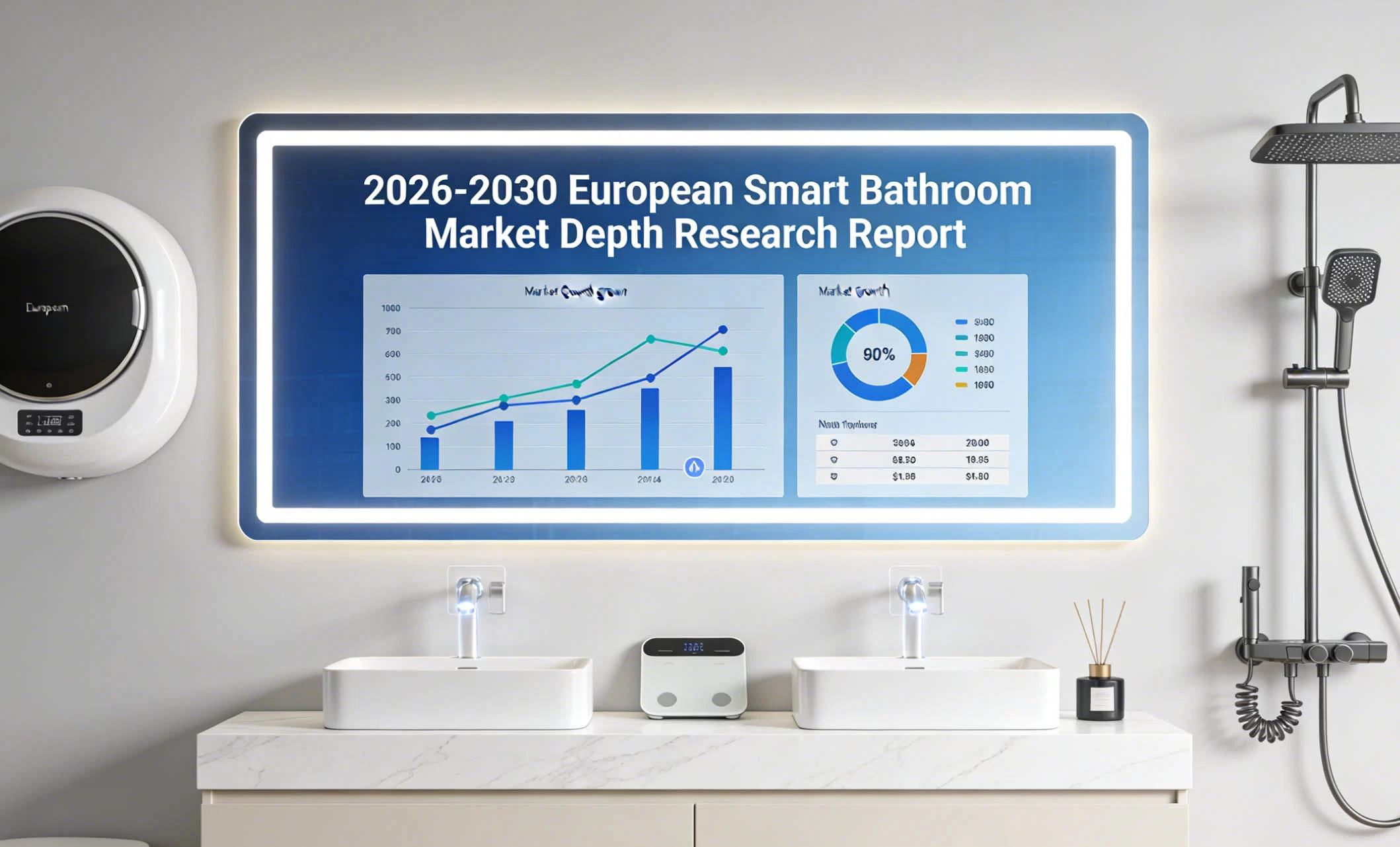
As we approach the 2026-2030 period, the European bathroom is undergoing a profound transformation from a purely functional utility room to a “private wellness sanctuary.” Driven by the European Green Deal, an aging population, and a post-pandemic obsession with indoor air quality (IAQ), the market is shifting toward smart bathroom solutions that prioritize health and sustainability. The global market size, valued at $10.19 billion in 2025, is projected to surge to $24.83 billion by 2034. This report analyzes the European landscape, emerging industry standards, and the disruptive role of XLOO’s negative-pressure and AI-integrated technologies.

European Market Landscape & Macro Drivers (2026-2030)
1.1 Regional Market Dynamics: Germany and the UK
The European market is characterized by high technical standards and a rapid adoption of digital building automation.
Germany: The German smart bathroom market is expected to reach $1.02 billion by 2030, growing at a CAGR of 12.1%. In this region, integration with the KNX protocol—which holds a 51.3% share of the European home automation market—is essential for commercial and high-end residential projects. Surveys indicate that 52% of Germans prioritize energy-efficient living, making low-consumption smart fixtures a market requirement.
The United Kingdom: Demand is fueled by a booming hospitality sector and updated(https://www.england.nhs.uk/long-read/national-standards-of-healthcare-cleanliness-2025/). London’s hotel market alone continues to add thousands of rooms, all requiring hygienic hand drying and odor-control solutions that minimize cross-contamination risk.
1.2 Aesthetic Shifts: Biophilic Design and “Quiet Luxury”
By 2026, the dominant design philosophy is(https://www.gustavsberg.com/en/inspired-by/bathroom-trends-2026), which seeks to connect users with nature through natural materials like stone, wood, and warm metal finishes. This is complemented by the “Quiet Luxury” trend—understated, high-quality fixtures that offer advanced tech without overt branding. Colors are shifting toward natural palettes such as Talco (talc) and Pomice (pumice) to match Nordic light aesthetics.
XLOO Product Technical Analysis & Competitive Advantage
XLOO’s entry into the European market is timed with a regulatory crackdown on synthetic fragrance aerosols and a scientific re-evaluation of hand-drying hygiene.
2.1 XLOO Delux: Ozone Purification vs. Synthetic VOCs
Traditional air fresheners are increasingly viewed as a health liability. Research confirms they emit over 100 Volatile Organic Compounds (VOCs), including toxic substances like formaldehyde that react with ozone to form harmful secondary pollutants.10
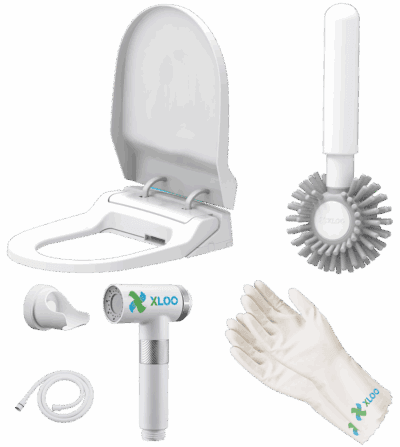
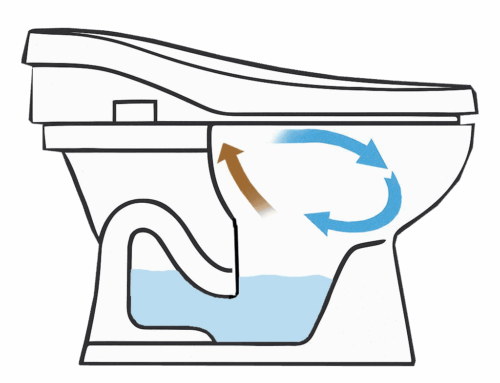
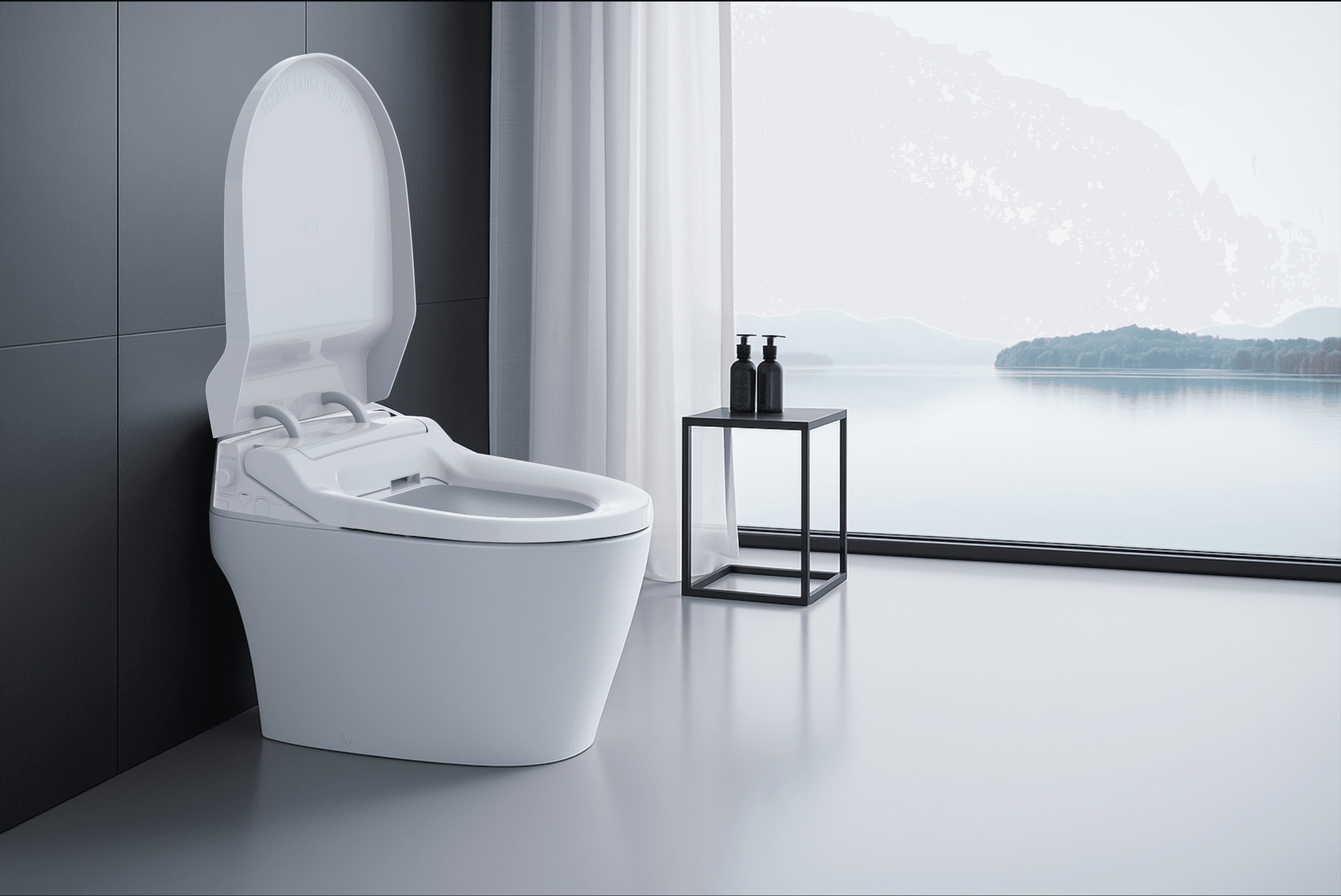
The XLOO Delux Toilet Seat disrupts this by utilizing a patented ozone ($O_3$) generator and a negative-pressure extraction system. This technology neutralizes $H_2S$ (hydrogen sulfide) and $NH_3$ (ammonia) at the source before they disperse into the ambient air, eliminating the need for toxic chemical sprays.12
2.2 XLOO Vortex: The Suction Paradigm Shift
Conventional jet air hand dryers have been criticized for aerosolizing bacteria and viruses, spreading them up to 3 meters.14
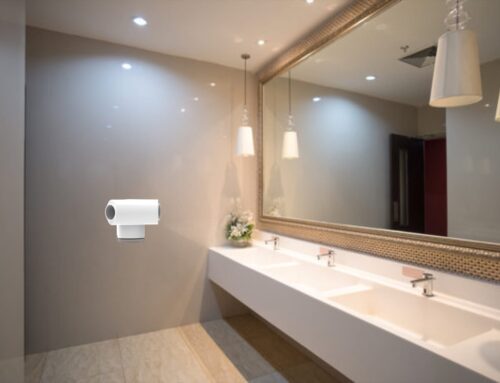
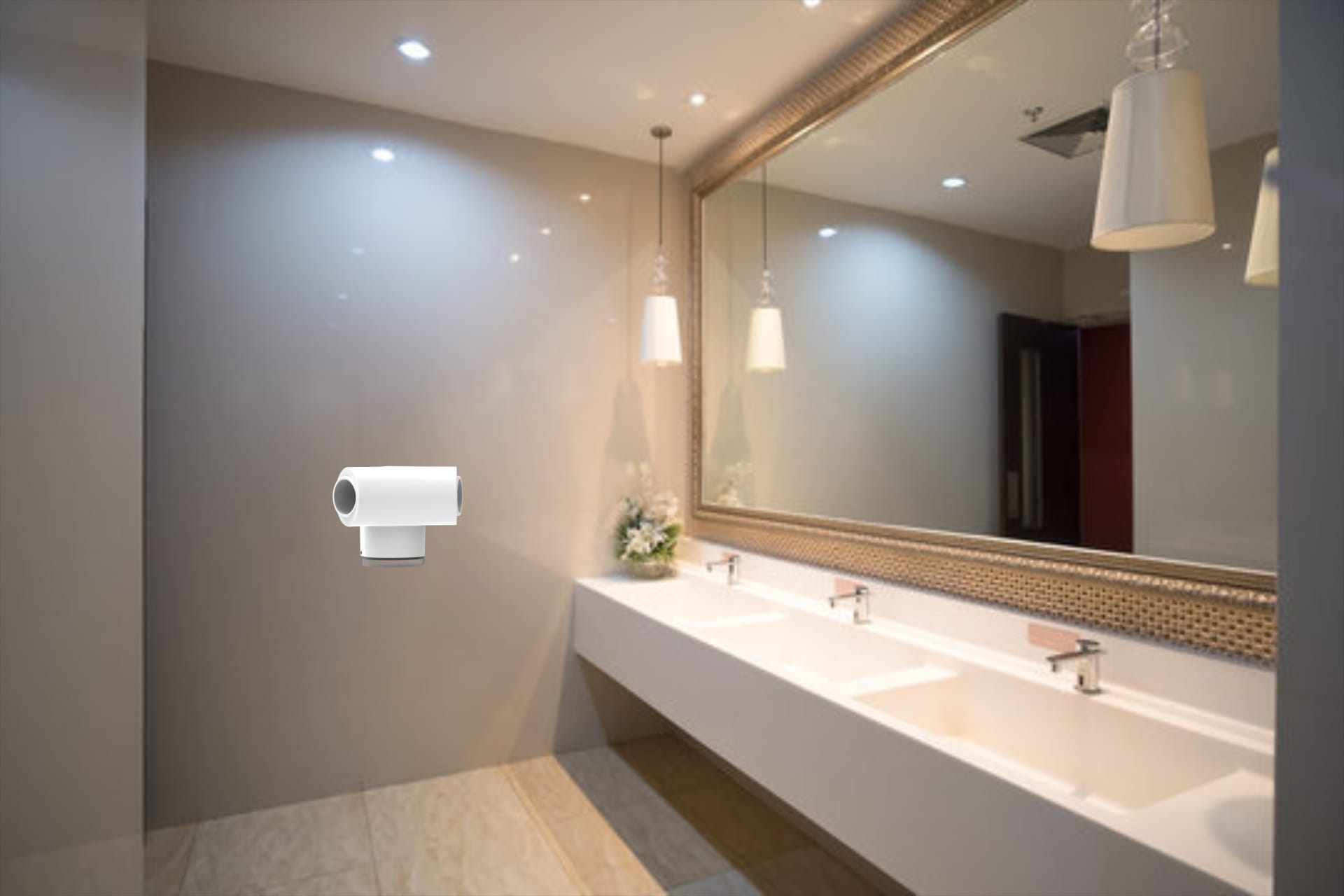
The XLOO Vortex is the world’s first suction-based hand dryer. Instead of blowing contaminated air, it uses a vortex-style vacuum to remove moisture directly from the skin. Integrated with HEPA, activated carbon, and UVC light filtration, the Vortex functions as a localized air purifier, meeting the hygiene requirements for clinical settings and high-traffic hubs like airports.16
2.3 Smart AI Integration & Sustainability Certification
The XLOO Smart AI Bathroom System leverages a network of sensors ($VOC$, $H_2S$, $NH_3$) to create a responsive environment.12 This data-driven approach is critical for earning credits in global sustainability frameworks:
WELL Building Standard: XLOO’s continuous monitoring and filtration help projects meet enhanced thresholds for inorganic gases and IAQ monitoring (Feature A08).17
BREEAM V7: The system supports the(https://www.arm-environments.com/resources/breeam-nc-v7-what-has-changed-for-the-iaq-sector-updated-2025) and facilitates operational water use prediction (Wat 05), helping facility managers reduce maintenance costs by up to 23% through predictive maintenance.19


From “Chemical Masking” to “Active Purification”
This shift defines the transition from using synthetic fragrances to conceal restroom odors toward the active elimination of airborne contaminants at the molecular level.
Chemical Masking: This legacy approach relies on synthetic aerosol air fresheners and wax melts that emit more than 100 volatile organic compounds (VOCs) into the indoor environment.1 Many of these products contain hazardous substances such as formaldehyde, phthalates, and 1,4-dioxane, which are classified as toxic or carcinogenic by health authorities.1 Recent engineering research highlights that these fragrances react with ozone entering via ventilation systems to form harmful “nanocluster aerosols”—ultrafine particles that can penetrate deep into the lungs.3 This creates a “sick building” cycle where masking chemicals worsen the very indoor air quality they intend to improve.4
Active Purification: This modern standard adopts a “no-smell” philosophy using the patented molecular neutralization technology pioneered by XLOO. Instead of layering scents, the system employs a negative-pressure extraction fan to capture foul air directly from the source.6 An internal ozone ($O_3$) generator then oxidizes the chemical bonds of odor-causing molecules like $H_2S$ (hydrogen sulfide) and $NH_3$ (ammonia), effectively destroying them without the use of synthetic additives. This process provides a chemical-free environment that meets stringent(https://www.arm-environments.com/resources/breeam-nc-v7-what-has-changed-for-the-iaq-sector-updated-2025) for occupant health and sustainability.7
From “Blowing Germs” to “Suction Filtration”
This shift addresses the physical mechanics of hand hygiene, moving from air-dispersal systems that spread pathogens to vacuum-based systems that capture and sanitize them.
Blowing Germs: Conventional jet air and high-speed hand dryers operate by “blowing” moisture and residual microbes into the ambient air. Clinical studies demonstrate that these dryers can disperse viral and bacterial aerosols up to 3 meters away from the unit, contaminating floors, walls, and even the face masks of other washroom visitors. Research confirms that person contamination is 100- to 1,000-fold higher when using jet air dryers compared to paper towels, posing a significant cross-infection risk in high-traffic or clinical settings.
Suction Filtration: Representing the first major advance in drying physics, the Vortex suction hand dryer utilizes a powerful vacuum to draw water droplets and airborne particles away from the user. By creating a negative-pressure environment, the system prevents the “splatter effect” associated with blowing air. The drawn air is then passed through a 3-stage filtration system—comprising HEPA, activated carbon, and UVC light—to deliver sanitized, fresh air back into the room. This technology achieves high-speed drying efficiency (90% dryness in 10 seconds) while serving as a localized air purifier, setting a new benchmark for public hygiene and airport facility management.
Conclusion
The 2026-2030 European market demands a synthesis of(https://www.gustavsberg.com/en/inspired-by/bathroom-trends-2026) and uncompromising hygiene. XLOO’s patent-backed approach—moving from “chemical masking” to “active purification” and from “blowing germs” to “suction filtration”—positions the brand as a key innovator for the next decade of sustainable building development.